Is Kindle Unlimited Worth It in 2026? Honest Review
Affiliate Disclosure
Disclosure: This article contains affiliate links. We may earn a commission at no extra cost to you.
Kindle Unlimited charges $12.99 per month for access to over 4 million ebooks, select audiobooks, and magazines. Whether it delivers real value depends almost entirely on what you read, how fast you read it, and whether the books you want are actually in the catalog.
Free: The Audible Credit Strategy Guide: Never Waste a Credit Again
Average reader saves $180/year
Here is an honest breakdown for 2026 — not a marketing summary, but an actual assessment of when KU is worth paying for and when it is not.
No spam. Unsubscribe anytime.
What you actually get
The headline number — 4 million titles — is real but misleading about the type of content. The KU catalog is weighted heavily toward indie-published books, self-published genre fiction, and niche nonfiction. The major traditional publishers (Penguin Random House, HarperCollins, Simon & Schuster) are largely absent. If your reading list is built around mainstream bestsellers from those imprints, you will hit gaps regularly.
Where KU genuinely excels: romance novels, self-published science fiction and fantasy, independent thriller writers, business books from indie authors, and fast-moving genre reads. Readers in these categories often find the catalog feels inexhaustible. Readers who primarily want Pulitzer winners and debut literary fiction will find it thin.
You can hold up to 20 borrowed titles in your library simultaneously. There are no due dates or late fees — return a book whenever you are done, or keep it as long as you like while subscribed.
The break-even math
Individual Kindle ebooks typically run $9.99–$14.99 from major publishers, and $3.99–$7.99 from indie authors. At $12.99/month, the break-even point is roughly one average-priced indie book per month, or one mainstream ebook every 13 months.
In practice, if you finish two or more books per month that are available in the KU catalog, the service is already saving you money. If you read four or more, it is a clear value advantage. If you read one book a month — particularly a specific title from a mainstream publisher — you are probably better off buying that title outright.
Who gets clear value
Strong fit for KU:
- You read 3+ books per month
- Your preferred genres are romance, fantasy, thriller, sci-fi, or business
- You enjoy sampling: borrowing, reading 30–40 pages, deciding it is not working, returning it, and moving on with no friction
- You are actively discovering new authors rather than following a fixed list
- You already own a Kindle device or use the Kindle app regularly
Weak fit for KU:
- You read one carefully chosen book at a time and always finish it
- Your reading list consists mainly of mainstream bestsellers from the last two years
- You prefer owning books you love (KU titles disappear when you cancel)
- Your primary format is audiobooks — Audible serves that use case better
KU vs buying individual ebooks
The main trade-off is ownership versus access. Books you purchase on Kindle are yours permanently. KU books are borrowed — if your subscription lapses, they are removed from your library. For readers who re-read favorites, annotate heavily, or think of their Kindle library as a collection, ownership matters.
For readers who treat books more like streaming — you want a lot of options, you move through them quickly, and re-reading is rare — KU is a better model. The math also works clearly in KU's favor the more frequently you read.
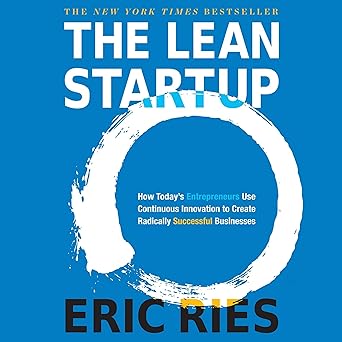
Books like The Lean Startup and Deep Work are good examples of titles available in multiple formats that serious readers return to regularly. If you know you will re-read something, buying it outright makes sense. If you want to read it once and move on, KU is cleaner.
Genres worth exploring on KU right now
Romance and contemporary fiction — The strongest category in the catalog. Thousands of well-reviewed indie romance titles, including series that update frequently.
Self-published fantasy and sci-fi — Brandon Sanderson's work, LitRPG series, and indie space opera are well represented. If you read fast in this genre, KU pays for itself quickly.
Business and productivity nonfiction — A strong secondary category. Independent authors covering topics like time management, personal finance, and entrepreneurship are well represented. You will find titles here that match or exceed the quality of traditionally published equivalents.
True crime and psychological thriller — Large selection of indie mystery and thriller novels. Quality variance is higher here, but that is part of the sampling appeal — you can try three different authors in a week with no sunk cost.
Magazines — the catalog's thinnest corner. Titles exist, but the selection is narrow and issues occupy slots in the same 20-title borrow limit as books. If periodicals are a real share of your reading, a dedicated service like Magzter GOLD is the cleaner answer — thousands of full-issue magazines under one subscription, doing for magazine readers what KU does for high-volume ebook readers.
The free trial is the right way to test it
Amazon offers a 30-day free trial for new KU members. That is enough time to actually test whether the catalog fits your reading habits. Browse for 20 minutes, borrow three books in the genres you normally read, and see how many you finish before the month ends. The trial gives you real data about your own habits — more useful than any review.
Start your Kindle Unlimited free trial — 30 days free →
Verdict
Kindle Unlimited is worth $12.99/month if you read frequently and your tastes align with the catalog. It is a poor value if you read one mainstream bestseller per month and are not interested in indie authors. The free trial removes the financial risk of testing it, which makes the decision easy: try it for a month, pay attention to how many books you actually finish, and decide from there.
FAQ
Does Kindle Unlimited include audiobooks?
Yes, but the audiobook selection is significantly more limited than the ebook catalog and less comprehensive than Audible. KU is primarily an ebook service with some audiobook titles included.
Can I use Kindle Unlimited without a Kindle device?
Yes. The free Kindle app works on iOS and Android phones and tablets. You do not need a dedicated Kindle device.
What happens to KU books if I cancel my subscription?
Borrowed KU titles are removed from your device when your subscription ends. Books you purchased separately (not borrowed through KU) remain in your library permanently.
Is Kindle Unlimited the same as Amazon Prime Reading?
No. Amazon Prime Reading is a smaller benefit included with Prime membership — roughly 1,000 titles. Kindle Unlimited is a separate paid subscription with a much larger catalog.
How does KU compare to Scribd?
Scribd includes more traditionally published titles and also offers audiobooks and magazines in one subscription. KU has a larger pure-ebook catalog, particularly for indie fiction. If you want mainstream publishers and format variety, Scribd may suit you better. If you want volume in genre fiction, KU wins.
Discussion
Sign in with GitHub to leave a comment. Your replies are stored on this site's public discussion board.