Best Kindle Books to Read This Summer 2026
Affiliate Disclosure
Disclosure: This article contains affiliate links. We may earn a commission at no extra cost to you.
Summer is a good time to rebuild a reading habit — longer days, more downtime, and lower pressure around finishing anything quickly. The books below work well on Kindle specifically: they are long enough to stay interesting across a two-week beach trip, paced well for reading in short bursts, and available to borrow free through Kindle Unlimited or buy individually at reasonable prices.
Free: The Audible Credit Strategy Guide: Never Waste a Credit Again
Average reader saves $180/year
This is not a list of the most critically acclaimed books of 2026. It is a list of books that are genuinely good reads in digital format right now, organized by what kind of summer reading you actually want.
No spam. Unsubscribe anytime.
For when you want to be completely transported
Where the Crawdads Sing is the kind of book that makes you forget where you are. The combination of a Southern Gothic setting, a murder mystery, and a coming-of-age story works unusually well together. Delia Owens writes the marsh in North Carolina with enough sensory detail that the physical place becomes part of the experience. It paces well across long sessions and short ones, which makes it ideal for summer reading when your schedule is unpredictable.
→ Read Where the Crawdads Sing on Amazon
The Midnight Library by Matt Haig gives you a high concept — a library containing every life you could have lived — and then uses it to explore regret, meaning, and what makes a life worth living. It is not a heavy read. Haig writes accessibly and keeps the philosophical ideas grounded in specific, emotional scenes. It finishes quickly for its size and leaves you thinking about it for longer.
→ Read The Midnight Library on Amazon
For the science fiction reader
Project Hail Mary by Andy Weir is the most fun science fiction novel in years. A scientist wakes up alone on a spaceship with no memory of how he got there or where he is going, and has to piece together what happened while simultaneously solving the problem he was sent to solve. Weir's technical problem-solving style works better here than in The Martian — the science is more interesting and the emotional core is stronger. This is a summer page-turner.
→ Read Project Hail Mary on Amazon
Dune by Frank Herbert rewards a summer reread. If you read it years ago, coming back to it now — after the films and the cultural conversation — is a different experience. The political and ecological ideas hold up better than most science fiction of that era. It is long and dense in the right ways: the kind of book that justifies a week of sustained focus.
For nonfiction readers
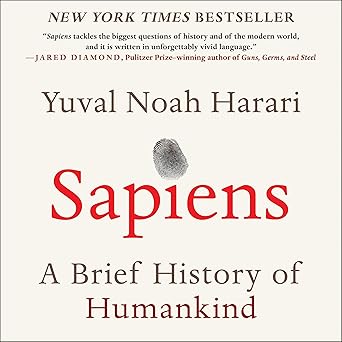
Sapiens by Yuval Noah Harari remains one of the most readable nonfiction books available in Kindle format. It covers the entire arc of human history in a way that does not feel rushed or oversimplified. Each chapter raises ideas that stay with you — about agriculture, money, religion, and the stories humans tell themselves. If you have been meaning to read it and have not, summer is the right time.
Outliers by Malcolm Gladwell is a shorter, faster nonfiction read — more essay than book in the best sense. The argument about what actually creates exceptional success (timing, opportunity, practice, and cultural context) is still compelling and still pushes back against the narrative of pure individual merit. It reads in a weekend.
For self-development without the hustle culture
Atomic Habits by James Clear is the best book on behavior change written for practical application. It is structured clearly, each chapter moves to the next idea without padding, and the specific techniques are immediately usable. It is also the kind of book that is worth returning to — the second read after trying some of the techniques is more valuable than the first.
→ Read Atomic Habits on Amazon
Deep Work by Cal Newport is a useful counterweight to the distraction-heavy summer default. The argument — that the ability to focus deeply on cognitively demanding work is both increasingly rare and increasingly valuable — is well constructed and supported. It is particularly good for readers who sense that their attention is worse than it used to be and want a framework for addressing that.
For fast-paced summer thriller reading
The Girl on the Train holds up as a fast-moving psychological thriller with an unreliable narrator done well. It is the kind of book you read on a plane or across two beach afternoons — propulsive, well-paced, and with a third act that delivers.
Fourth Wing by Rebecca Yarros is a fantasy romance that has driven enormous word-of-mouth. It is long, it moves quickly, it has a war college setting and dragon riders, and it is written for readers who want escalating emotional stakes alongside action. If you want something to disappear into for a week, this is a reliable choice.
Getting the most value from summer reading on Kindle
Many of the books above are available to borrow for free through Kindle Unlimited. If you expect to read four or more books this summer, the $12.99 monthly subscription will cost less than buying each title individually — and the catalog includes thousands of other genre fiction and nonfiction titles you will not run out of.
Start a free 30-day Kindle Unlimited trial →
For readers who prefer owning their books, individual Kindle editions of most titles on this list run $10–$14. Either way, the Kindle format makes summer reading easier: no carrying heavy hardcovers, automatic sync across devices, and adjustable font sizes for reading outdoors.
How to choose
If you want one book that works for almost anyone, start with Project Hail Mary — it is the most accessible entry on the list and the one most likely to remind you why you enjoy reading in the first place. For nonfiction, Atomic Habits or Sapiens are both strong starting points depending on whether you want practical tools or big ideas.
The rest of the list is organized by mood rather than quality — all of these are worth your time, but summer reading is as much about what fits the moment as what is objectively best.
Discussion
Sign in with GitHub to leave a comment. Your replies are stored on this site's public discussion board.